
Armenian Coffee: How to Make It and What You Need
What Is Armenian Coffee?
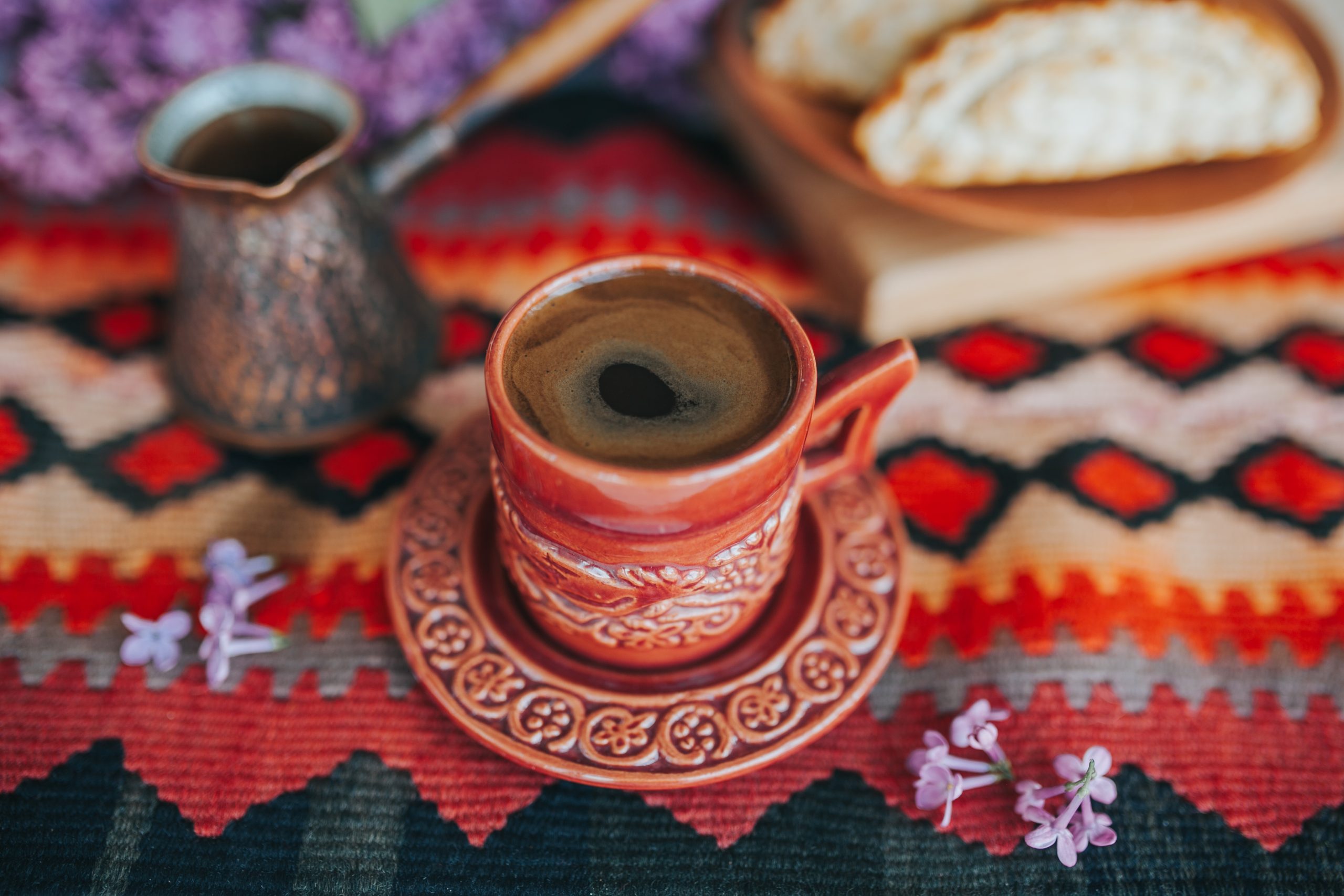
Armenian coffee is strong, unfiltered coffee brewed slowly in a small pot. In Armenian it is called soorj. The coffee is ground as fine as flour and cooked with cold water and sugar. Nothing gets strained out. The grounds settle at the bottom of the cup, and you sip the rich coffee above them.
In Armenian homes, coffee is more than a drink. It is how you welcome a guest, end a meal, or start a long conversation. A visit rarely ends without a small cup on the table. Many families also turn the empty cup over afterward to read the grounds.
The good news is that it is easy to make. You need only a few simple tools and about five minutes. This guide covers what to buy, how to brew it, and how to serve it the traditional way.
What You Need to Make Armenian Coffee
An Armenian Coffee Pot (Jazve)
The most important tool is the pot. An Armenian coffee pot is small, with a wide base, a narrow neck, and a long handle. It is often called a jezve or srjep. Most are made of copper or brass, which spreads heat evenly. The narrow neck helps the foam build up as the coffee heats.
Pick a size that matches how many cups you usually make. A small pot makes one or two cups. A larger one serves four to six guests. A pot that is too big for the amount of water will not form good foam.
The handle gets hot on the stove. A quilted cover keeps your hand safe. Try the handmade Armen Jezvee Holder or its partner, the Armine Jezvee Holder.
Finely Ground Coffee
The grind matters more than the brand. Armenian coffee needs a powder fine grind, finer than espresso. Regular drip coffee will not work, because the grounds will float instead of settling. You can buy coffee already ground for Armenian style brewing. Many Armenian brands sell it in small vacuum packs.
Small Cups and Saucers
Armenian coffee is served in small cups that hold about 2 to 3 ounces. Saucers are a must if you plan to read the grounds later. Small decorated cups make the ritual feel special.
Set each cup on a coaster to protect your table. The woven Evil Eye Coaster adds a traditional touch.
Cold Water and Sugar
Always start with cold water. It gives the coffee time to brew before it gets hot. Sugar is optional, but it goes into the pot, not the cup. So decide how sweet you want it before you start.
How to Make Armenian Coffee
This method makes one cup. Multiply everything by the number of guests.
Per cup:
- 3 oz (about 90 ml) cold water, or one coffee cup filled to the rim
- 1 heaping teaspoon finely ground coffee (about 7 g)
- Sugar to taste: none for plain, 1 teaspoon for medium, 2 teaspoons for sweet
Steps:
- Pour the cold water into your jezve. Measuring with the cup you will serve in is the easiest way to get it right.
- Add the coffee and the sugar. Stir well until the coffee sinks and the sugar dissolves.
- Set the pot on low to medium heat. Do not stir again from this point on.
- Watch it closely. After two to three minutes, a dark foam will start to rise up the neck of the pot.
- Take the pot off the heat just before the foam reaches the rim. Never let it boil over, or you will lose the foam.
- Spoon a little foam into each cup. For thicker foam, return the pot to the heat once and let it rise again.
- Pour slowly and steadily so the foam stays on top.
- Let the cup sit for a minute so the grounds can settle before you drink.
Tips for better coffee:
- Low heat gives the best foam. Rushing it on high heat makes the coffee bitter.
- Some families add a pinch of ground cardamom for a warm, fragrant flavor.
- Serve a glass of cold water on the side. It clears the palate before the first sip.
- Do not drink the last sip. That is where the grounds sit.
How to Serve Armenian Coffee
Presentation is part of the tradition. Bring the cups out on a tray, each on its own saucer. Ask guests how sweet they like it before you brew, since the sugar is already in the pot.
Armenian coffee pairs well with something small and sweet. Common choices are baklava, dried fruit, nuts, chocolate, or a piece of gata or nazook. Serving coffee with a sweet is a quiet way of telling guests they are welcome to stay.
For an easy pairing, try baklava or shamali. Both come in boxes of 8 or trays of 40 for larger groups. Set out nuts or dried fruit in small hand painted ceramic bowls so every guest can reach them.
In many homes, the host makes coffee fresh for every round. Offering a second cup is a sign that you are enjoying the company.
Coffee Cup Reading: An Armenian Tradition
When the cup is empty, the fun often begins. Coffee cup reading is a fortune telling custom shared across Armenia and its neighbors. It is mostly done for entertainment among family and friends.
Here is how it works:
- Leave a small amount of coffee and grounds in the bottom of the cup.
- Make a wish, then swirl the cup gently a few times.
- Place the saucer on top and flip the cup over in one quick motion.
- Let it cool for several minutes so the grounds dry into shapes.
- Lift the cup and look for images in the patterns on the inside walls.
The reader then tells a story from the shapes. A bird might mean good news on the way. A road or a long line might point to travel. A ring can hint at a wedding. Shapes near the rim are said to come soon, while those near the bottom are further off.
The real charm is the conversation. A cup reading can turn a quick coffee into an hour of laughter.


