Armenian Words That Will Make Your Grandma Smile
Eastern vs Western Armenian: A Quick Guide
Armenian has two main dialects. Eastern Armenian is spoken in Armenia today. Western Armenian is common in diaspora families in the United States, Lebanon, and France.
The two sound a little different. Western speakers often swap some letters, so a B becomes a P and a D becomes a T. That is why one grandma says barev (Բարև) and another says parev (Բարեւ). Notice the spelling barely changes. Only the sound does.
Below, each word is written in Latin letters first so you can say it, then in Armenian script so you can recognize it. The Eastern version comes first, and the Western version follows when it differs. If you are not sure which one your family speaks, just listen to how Grandma says it.
Hello and Goodbye in Armenian
The easiest way to say hello in Armenian is barev (Բարև). It works with friends, cousins, and the neighbor next door. For elders, add a word to make it polite: barev dzez (Բարև Ձեզ).
Grandma will notice the respect.
| English | Eastern | Western |
|---|---|---|
|
Hello |
Barev (Բարև) | Parev (Բարեւ) |
|
Hello (polite) |
Barev dzez (Բարև ձեզ) | Parev tsez (Բարեւ ձեզ) |
| Welcome | Bari galust (Բարի գալուստ) |
Pari yegak (Բարի եկաք) |
| Goodbye | Tstesutyun (Ցտեսություն) |
Tsedesutyun (Ցտեսութիւն) |
| Bye (casual) | Hajogh (Հաջող) |
Hajogh (Յաջող) |
Tstesutyun (Ցտեսություն) is a mouthful. It means “until we see each other again.” Practice it slowly, one sound at a time.
How to Say Thank You in Armenian
This is the phrase families hear most often, and the one that matters most at Grandma’s table.
The full word is shnorhakalutyun (Շնորհակալություն). It is long, so take a breath first.
|
English |
Eastern | Western |
|---|---|---|
|
Thank you |
Shnorhakalutyun (Շնորհակալություն) | Shnorhagalutyun (Շնորհակալութիւն) |
|
Thank you very much |
Shat shnorhakal em (Շատ շնորհակալ եմ) |
Shad shnorhagal em (Շատ շնորհակալ եմ) |
| Thanks (casual) | Merci (Մերսի) |
Merci (Մերսի) |
| You’re welcome / Please | Khndrem (Խնդրեմ) |
Khntrem (Խնդրեմ) |
Yes, many Armenians really do say merci (մերսի). It is quick and everyone uses it. But the full word shows real effort. Save it for when Grandma hands you a plate of dolma. You can also check our dolma recipe, in case you decide to make one yourself.
How to Serve Armenian Coffee
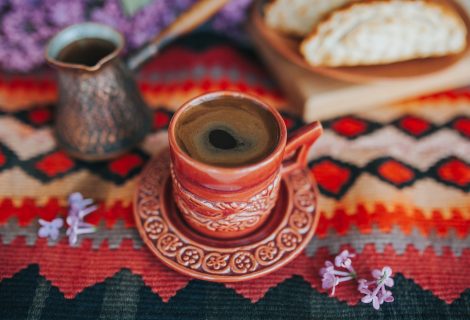
Presentation is part of the tradition. Bring the cups out on a tray, each on its own saucer. Ask guests how sweet they like it before you brew, since the sugar is already in the pot.
Armenian coffee pairs well with something small and sweet. Common choices are baklava, dried fruit, nuts, chocolate, or a piece of gata or nazook. Serving coffee with a sweet is a quiet way of telling guests they are welcome to stay.
For an easy pairing, try baklava or shamali. Both come in boxes of 8 or trays of 40 for larger groups. Set out nuts or dried fruit in small hand painted ceramic bowls so every guest can reach them.
In many homes, the host makes coffee fresh for every round. Offering a second cup is a sign that you are enjoying the company.
Good Morning and Good Night in Armenian
| English | Eastern | Western |
|---|---|---|
|
Good morning |
Bari luys (Բարի լույս) | Pari looys (Բարի լոյս) |
|
Good afternoon |
Bari or (Բարի օր) | Pari or (Բարի օր) |
| Good evening | Bari yereko (Բարի երեկո) |
Pari irigoon (Բարի իրիկուն) |
| Good night | Bari gisher (Բարի գիշեր) |
Pari kisher (Բարի գիշեր) |
Bari luys (Բարի լույս) literally means “good light.” The classic reply is luys bari (Լույս բարի), which flips the words around. Try it the next time someone greets you first.
How Are You in Armenian
After hello comes the question every grandmother asks. Here is how to ask it yourself, and how to answer.
| English | Eastern | Western |
|---|---|---|
|
How are you? |
Inchpes es? (Ինչպե՞ս ես) | Inchbes es? (Ինչպէ՞ս ես) |
| How are you? (polite) | Inchpes ek? (Ինչպե՞ս եք) |
Inchbes ek? (Ինչպէ՞ս եք) |
|
What’s new? (casual) |
Vonts es? (Ո՞նց ես) |
Inch ga chiga? (Ի՞նչ կա չկա) |
| I’m good | Lav em (Լավ եմ) |
Lav em (Լաւ եմ) |
| Not bad | Vochinch (Ոչինչ) |
Vochinch (Ոչինչ) |
A tip: when Grandma asks how you are, she wants more than lav em (լավ եմ). She wants to know if you are eating enough. Be ready.
I Love You in Armenian
If you learn only one phrase from this list, make it this one. Say it at the door as you leave. It works every time.
| English | Eastern | Western |
|---|---|---|
|
I love you |
Yes kez sirum em (Ես քեզ սիրում եմ) |
Yes kezi ge sirem (Ես քեզի կը սիրեմ) |
|
I love you very much |
Shat em kez sirum (Շատ եմ քեզ սիրում) |
Shad ge sirem kezi (Շատ կը սիրեմ քեզի) |
| I missed you | Karotel em kez (Կարոտել եմ քեզ) |
Garodtsa kezi (Կարօտցայ քեզի) |
Want to make it last? Pair the words with a gift she will keep close. A soft Armenian shawl wraps her in warmth every time she wears it. A pomegranate necklace carries one of Armenia’s oldest symbols of family and abundance.
Jan, Hogis and Other Sweet Words
Armenian is full of warm little words. Grandmothers use them constantly, often in the same sentence.
- Jan (ջան): means “dear.” It goes after a name, as in Ani jan (Անի ջան) or Tatik jan (Տատիկ ջան). Add it to Grandma’s name and watch her melt.
- Hogis (հոգիս): means “my soul.” It is used for children, grandchildren, and anyone close.
- Sirun (սիրուն): means “pretty” or “cute.” Expect to hear it a lot as a child.
- Balik (բալիկ): means “little one.” Many grandmothers still call adult grandchildren this.
- Tsavt tanem (ցավդ տանեմ): means “let me take your pain.” It sounds dramatic in English. In Armenian, it is pure love.
- Apres (ապրես): means “well done,” but literally “may you live.” Say it when Grandma’s cooking is perfect.
So what does jan (ջան) mean in Armenian, really? It means you belong. Adding it to someone’s name turns them into family.
What to Call Grandma and Grandpa in Armenian
Family titles change from home to home. Some families use the Eastern words. Others use Western ones. Some mix in Russian, Arabic, or French words from the countries where their families settled.
| English | Eastern | Western |
|---|---|---|
|
Grandma |
Tatik (Տատիկ) | Medzmama (Մեծմամա) |
|
Grandpa |
Papik (Պապիկ) | Medzbaba (Մեծպապա) |
|
Grandmother (formal) |
Mets mayr (Մեծ մայր) |
Medz mayr (Մեծ մայր) |
| Grandfather (formal) | Mets hayr (Մեծ հայր) |
Medz hayr (Մեծ հայր) |
| Mom | Mayrik (Մայրիկ) or mama (մամա) |
Mayrig (Մայրիկ) or mama (մամա) |
| Dad | Hayrik (Հայրիկ) or papa (պապա) |
Hayrig (Հայրիկ) or baba (պապա) |
The safest way to say grandma in Armenian is the way your own family does. Ask her what she called her grandmother. You will likely get a story along with the answer.
Shopping for a new grandchild? Browse our Baby Items for Armenian keepsakes.
Words for the Dinner Table
Armenian family life happens around the table. These phrases will carry you from the first bite to the last toast.
| English | Eastern | Western |
|---|---|---|
|
Enjoy your meal |
Bari akhorzhak (Բարի ախորժակ) |
Pari akhorjag (Բարի ախորժակ) |
| It’s delicious | Shat hamov e (Շատ համով է) |
Shad hamov e (Շատ համով է) |
| Cheers | Kenats (Կենաց) |
Kenats (Կենաց) |
| Thank you for the meal | Shnorhakalutyun (Շնորհակալություն) |
Shnorhagalutyun (Շնորհակալութիւն) |
When glasses go up, the word is kenats (կենաց). It means “to life.” Armenian toasts can run long, so keep your glass ready.
After dinner, coffee and something sweet usually follow. A box of baklava is always a welcome guest.
Happy Birthday and Congratulations in Armenian
One word does a lot of work in Armenian: shnorhavor (շնորհավոր). It means “congratulations,” and it shows up in most celebration wishes.
|
English |
Eastern |
Western |
|---|---|---|
|
Happy birthday |
Tsnundd shnorhavor (Ծնունդդ շնորհավոր) | Shnorhavor dzununt (Շնորհաւոր ծնունդ) |
| Congratulations | Shnorhavor (Շնորհավոր) |
Shnorhavor (Շնորհաւոր) |
| Happy holidays | Shnorhavor tonerd (Շնորհավոր տոներդ) |
Shnorhavor donerut (Շնորհաւոր տօներդ) |
To say happy birthday in Armenian, pair shnorhavor (շնորհավոր) with the word for birthday, tsnund (ծնունդ). Write it on a card and Grandma will read it twice.
Keep Learning Armenian at Home
A few words today can grow into real conversations. The best way to learn Armenian is a little at a time, every day.
Learn the Aybuben
The Armenian alphabet is called the aybuben (այբուբեն). The name comes from its first two letters, ayb (Ա) and ben (Բ), much like “alphabet” comes from alpha and beta. It has 38 letters, and seeing them every day is the fastest way to make them stick.
Flashcards and wall decals keep the letters in sight every day. Try the Armenian Alphabet Flashcards, or brighten a kid’s room with the Illustrated Alphabet Wall Decals.
Read and Listen Together
Words are easier to learn in context. Ask Grandma to read with you, and she will be thrilled to be your teacher. My First Book of Armenian Words is a great place to start. The ABC Children’s Musical turns car rides into practice. For the littlest learners, Armenian Alphabet Bath Toys make letters part of bath time.
Find more alphabet books and learning gifts in Books, Pens, Bookmarks.